
Aquaculture Tank Design: Key Considerations Before Engineering
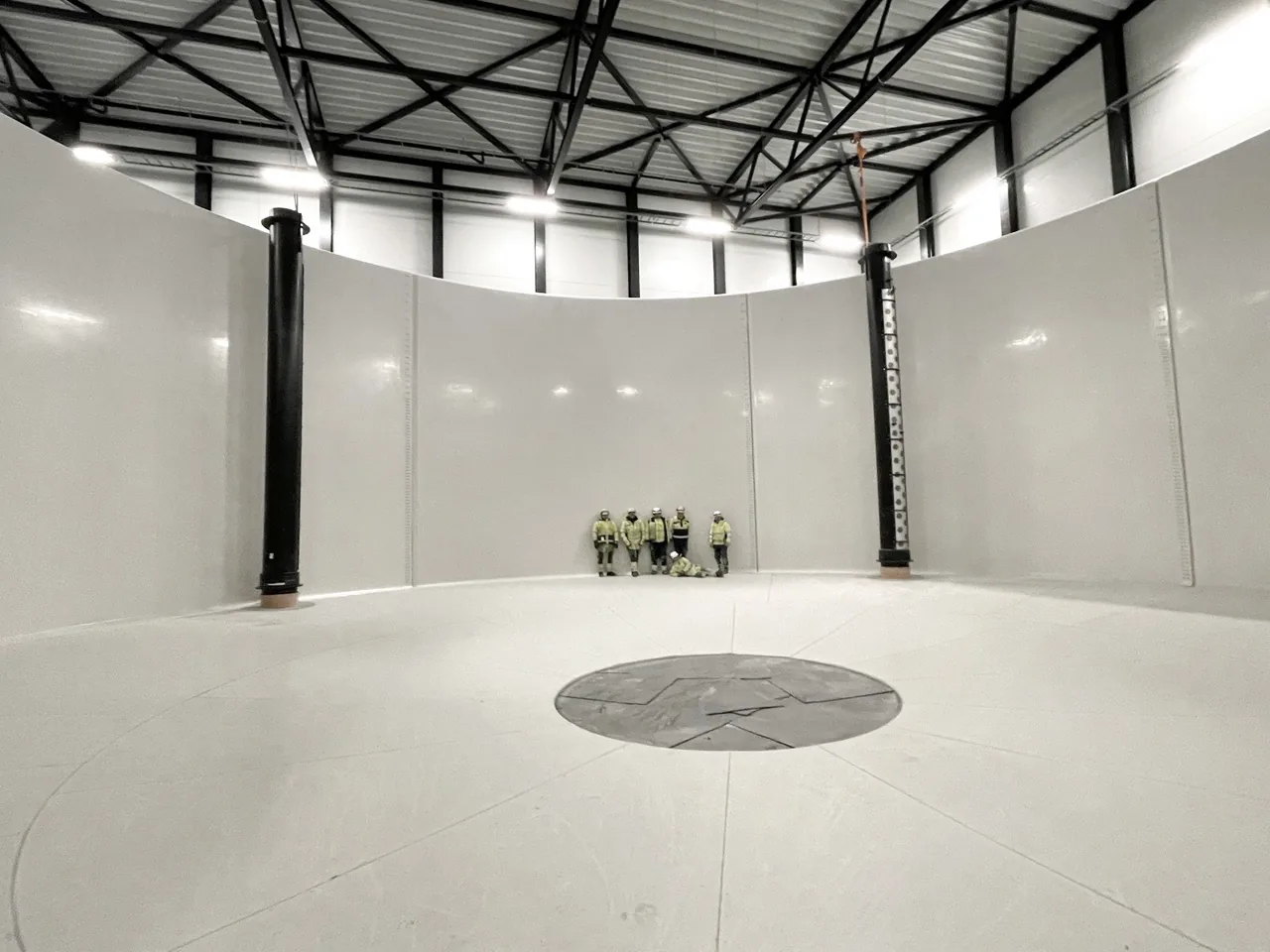
Designing fish farming tanks for land-based facilities requires more than choosing a diameter and depth. Process requirements, structural loads, site constraints and installation access all influence the final solution.
Aquaculture tank design should begin with a shared design basis between the developer, tank supplier, RAS provider and civil contractor. Before detailed engineering, the team needs to define operating water levels, process connections, available space and support conditions.
For the customer, these decisions affect how the facility can be built, operated and maintained. A tank that fits the floor plan may still leave insufficient room for pipework, cleaning equipment or installation. The purpose of early coordination is to identify those constraints while the design can still respond to them.
Match tank geometry to production needs and available space
Tank dimensions need to reflect the intended production stage, water volume and process requirements. They must also work within the building, including the space needed around and above the tank.
HighComp’s Fjon Bruk project illustrates how site constraints can influence geometry. Limited floor area led to tanks that were taller than standard.
“For Fjon, we delivered tanks that are taller than standard. It simply came down to the available floor area,” explains Fredrik Faye in HighComp’s article on composite fish tanks.
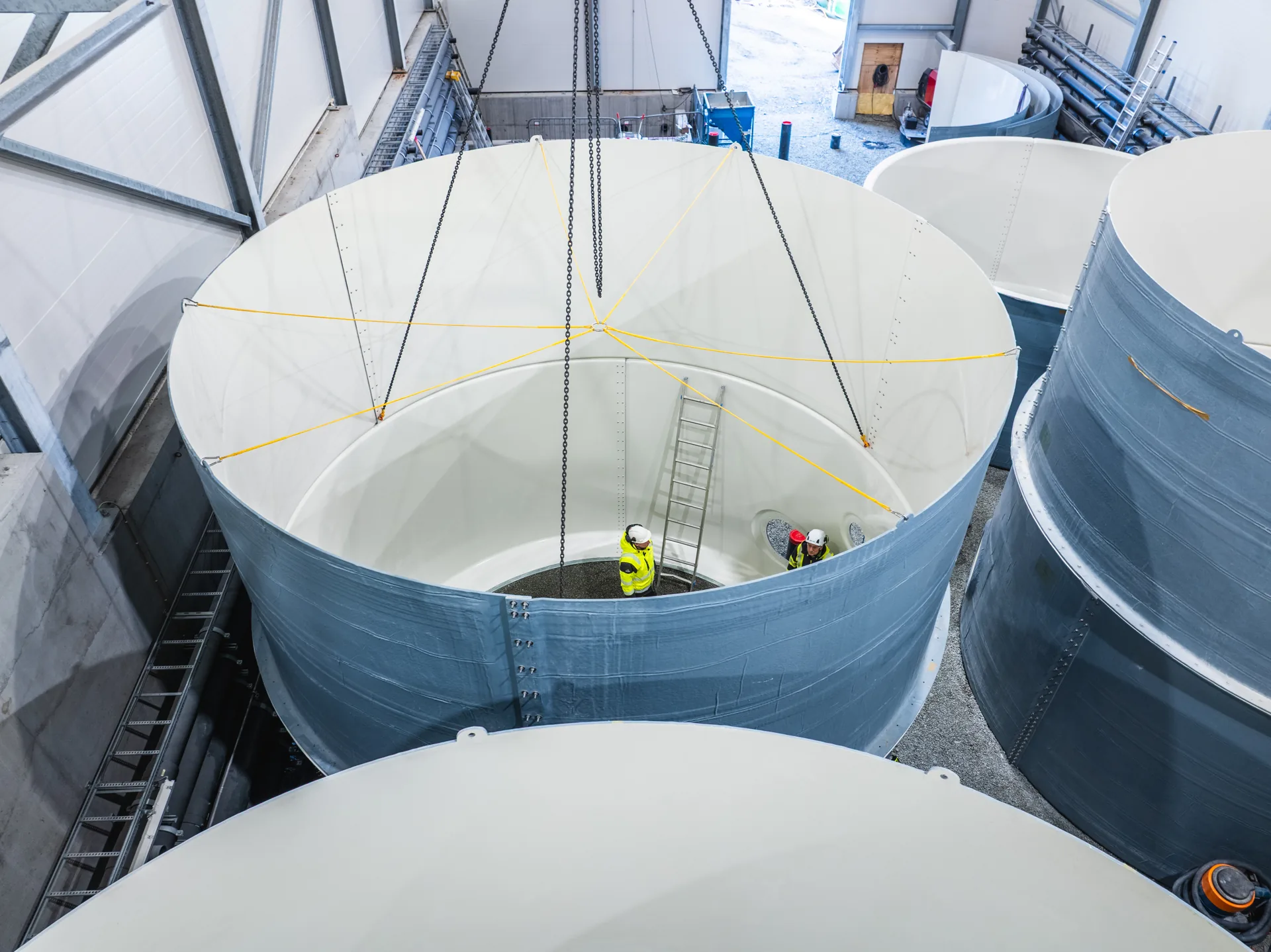
Increasing depth, however, is not simply a way to add volume. Greater water depth increases hydrostatic pressure at the bottom of the tank and changes the structural design requirements. Access for inspection, fish handling and cleaning must also be assessed.
The appropriate geometry is therefore a coordinated decision, not an isolated choice based on capacity.
Design RAS connections alongside the tank
In a recirculating aquaculture system, tank geometry, inlet arrangements and outlets influence water movement and solids transport. Selecting a circular tank alone does not establish the required hydraulic performance.
Research on circular RAS tanks demonstrates that inlet configuration can affect flow patterns and self-cleaning performance. The practical implication is that process requirements and structural details need to be developed together.
Before tank connection details are finalised, the project team should agree on required flow rates, inlet and outlet positions, pipe dimensions and the arrangement for removing solids.
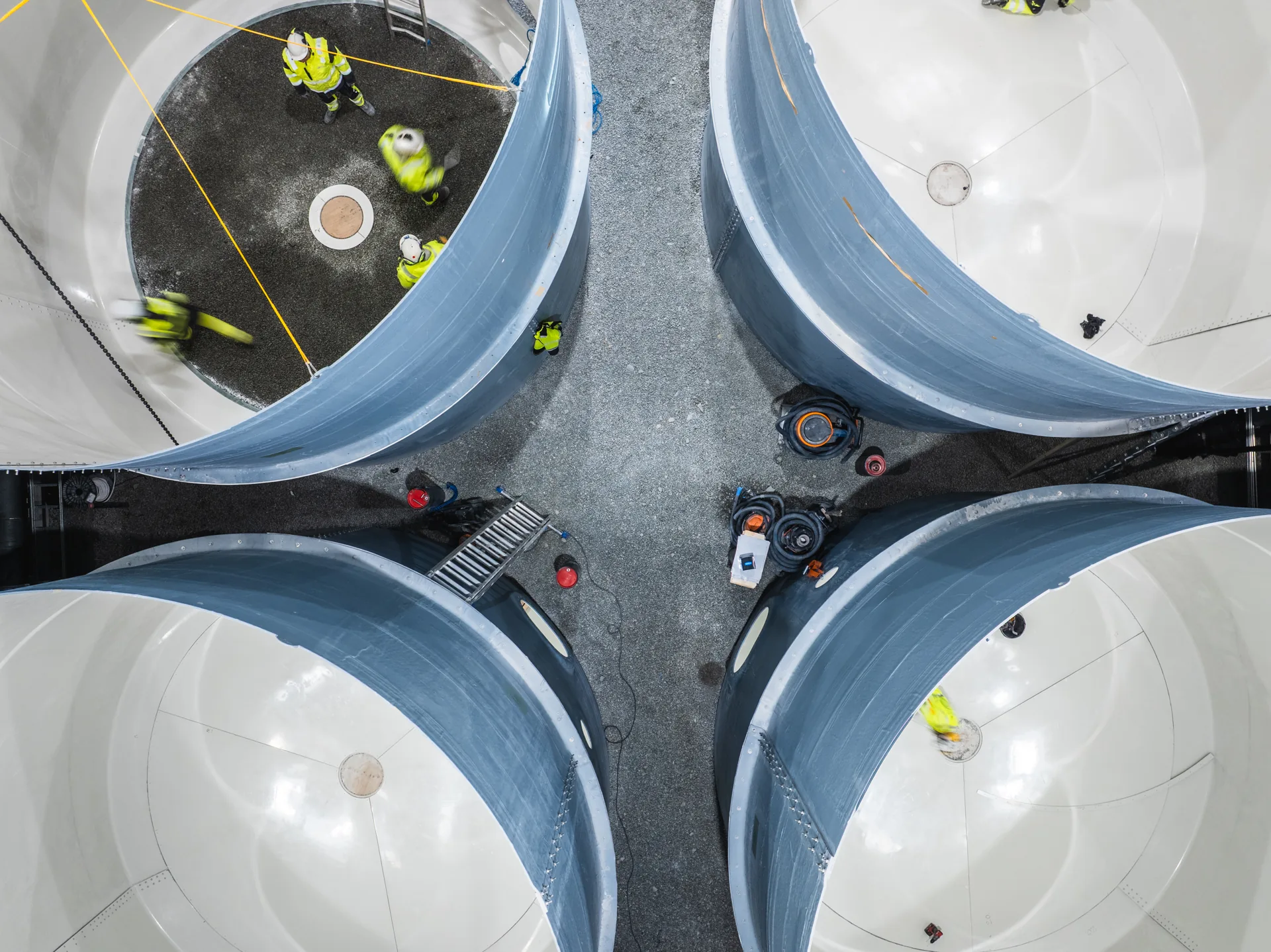
Responsibilities matter here. The RAS provider’s process requirements must be translated into coordinated connection details. For each penetration, the drawings should establish its position, any structural reinforcement required and who is responsible for the connection.
Specify structural loads, joints and support conditions
Water depth and tank shape establish important structural inputs, but the engineer also needs to understand support conditions and any additional loads from connected infrastructure.
Civil and tank designs should agree on how loads are transferred, the supporting geometry and installation tolerances. Where bridges, roofs or equipment interact with the tank, their support arrangements must also be defined.
HighComp’s mechanical tank joints provide a concrete example of project-specific engineering. The company specifies the bolt pattern, bolt dimensions and connection geometry for each project. Its joint solution incorporates a two-part sealing system.
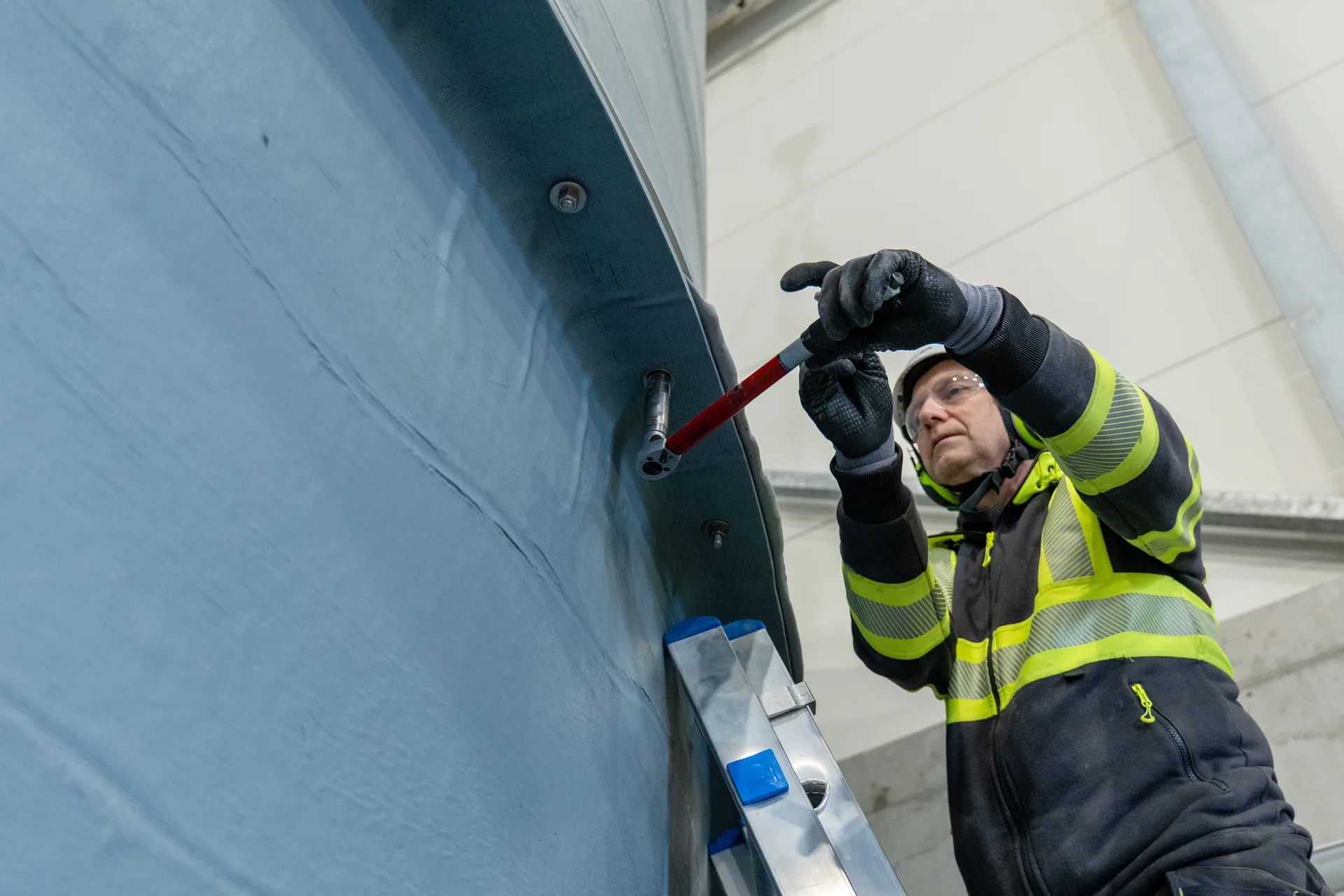
These details show why a modular tank cannot be specified by overall dimensions alone. Connections and supports form part of the engineered structure.
For Norwegian projects, relevant requirements under NS 9416 should also be established early. Standard Norge describes the standard as addressing risk analysis, design, execution, operation, user manuals and product datasheets, with the aim of reducing fish escapes.
Check transport and installation before fixing module dimensions
HighComp manufactures its aquaculture tanks as prefabricated sections. The size of those sections must suit both the journey to site and the available assembly space.
Road restrictions, vessel access, lifting arrangements and building openings can influence how a tank is divided into modules. Those choices also affect the number and location of joints.
At the design stage, the customer and suppliers should establish:
- Operating water levels, required volume and process inputs
- Tank geometry, maintenance access and connection positions
- Structural loads, support conditions and supplier responsibilities
- Transport limits, lifting access and assembly sequence
- Required inspection records and project documentation
HighComp’s integrated engineering and delivery approach connects these requirements with fabrication and installation. For the customer, the result is a tank solution developed around the facility’s actual constraints, rather than one that requires those constraints to be resolved on site.