Understanding Composite Materials in Modern Aquaculture Infrastructure

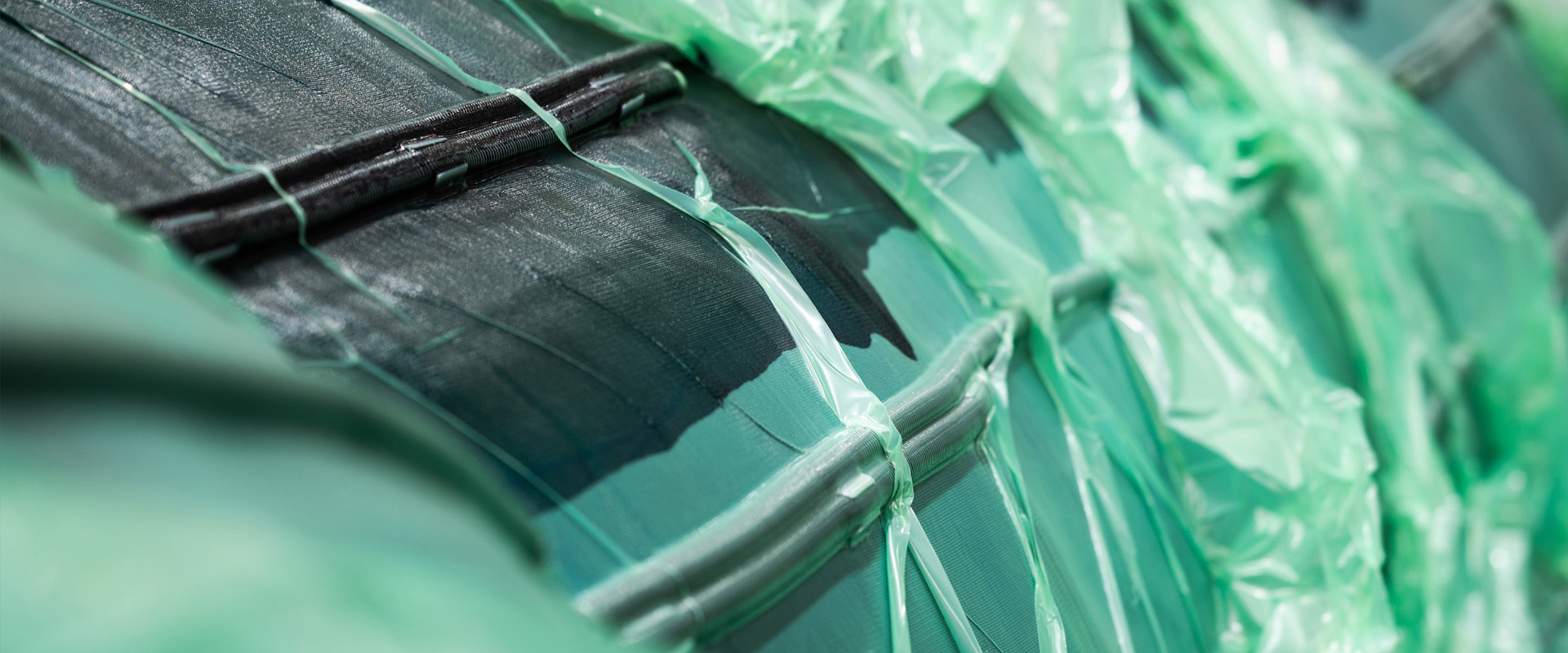
Glass Reinforced Polymer (GRP) is a structural composite material made of glass fibers embedded in a polymer resin matrix. The glass fibers provide strength and stiffness, while the resin protects the fibers and transfers loads throughout the structure.

The result is a lightweight, high-strength material engineered for structural applications in demanding environments. Originally developed for marine, offshore and high-performance industrial use, GRP is now increasingly applied in land-based aquaculture infrastructure.


What Makes GRP Different?

Unlike traditional construction materials, GRP does not rely on mass for strength. Instead, its structural performance is defined by engineered fiber orientation, laminate configuration and material composition.

This enables:

  • High strength relative to weight
  • Resistance to moisture and saline exposure
  • Stable performance under continuous load
  • Design flexibility in geometry and structure

GRP is not a coating or surface treatment — it is a structural material.

Why GRP Is Well Suited for Aquaculture

Land-based aquaculture facilities operate under continuous exposure to water, humidity and operational loads. Material degradation directly impacts structural reliability and long-term cost.

GRP performs particularly well in these environments because it:

  • Does not corrode in wet or saline conditions
  • Maintains structural integrity over decades
  • Requires minimal maintenance intervention
  • Supports hygienic surfaces and simplified cleaning

For aquaculture operators, this means predictable infrastructure performance in facilities where downtime is costly.

Structural Efficiency and Design Freedom

Because GRP offers an exceptional strength-to-weight ratio, it allows for large diameters and heights without excessive structural mass.

This enables:

Composite structures can achieve 50–70% weight reduction compared to steel and concrete, simplifying transport, handling and installation while maintaining load capacity.

The same structural principles used in offshore energy, subsea installations and aviation are applied to aquaculture infrastructure.
Durability and Design Life

GRP is inherently corrosion-free.

No coatings.
No sandblasting.
No repainting cycles.

When engineered correctly, composite structures are designed for a 50+ year design life under specified load conditions.

For capital-intensive land-based aquaculture projects, durability reduces lifecycle uncertainty and maintenance burden.

Construction Efficiency Through Prefabrication

Composite structures can be manufactured as large prefabricated modules in controlled environments.

This allows groundwork to progress simultaneously with fabrication, reduces the number of on-site joints and minimizes installation variability.

The result is reduced construction time and improved schedule predictability.

Sustainability Through Longevity

Material durability directly affects environmental impact over time.

Lower embodied CO₂ compared to many traditional materials, combined with minimal maintenance and extended service life, contributes to reduced lifetime environmental footprint.

Sustainability in aquaculture infrastructure is achieved through long-term performance.

Engineered for Customization

GRP is not limited to fixed geometries. HighComp develops optimized standard solutions based on documented performance, while also tailoring each delivery to meet specific site conditions, structural loads and process integration requirements.

Composite engineering allows both repeatability and customization — depending on project needs.

Backed by Offshore-Grade Composite Expertise

HighComp is part of CSUB Group — the world’s largest EPCI supplier of composite structures.

With Norway’s largest engineering department dedicated to composite design, offshore-grade structural methods are adapted specifically for aquaculture infrastructure.

This is not commodity tank production. It is engineered infrastructure.

Applied Across Aquaculture Infrastructure

Material expertise ensures structural consistency across the facility

Composite Aquaculture Tanks

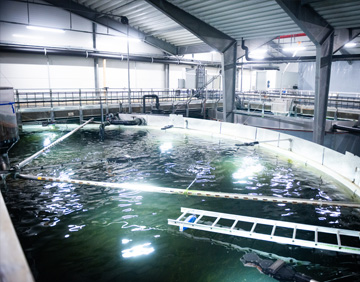
GRP tanks optimized for land-based RAS, smolt and grow-out systems.

RAS Water Treatment Tanks

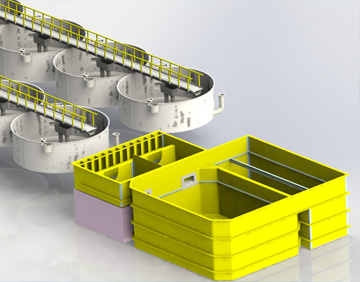
Composite tanks engineered for biological and mechanical filtration and degassing in recirculating systems.

LESS-STRESS™ Walkway Bridges

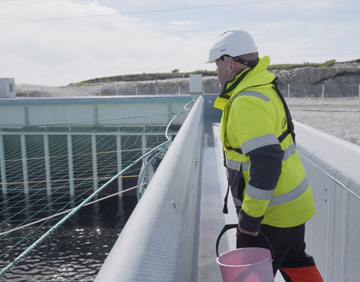
Corrosion-free composite bridges with spans up to 25 meters without structural support.

Tank Roof Systems

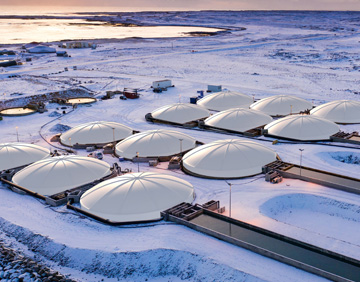
Composite roof solutions designed for outdoor facilities and controlled production environments.